
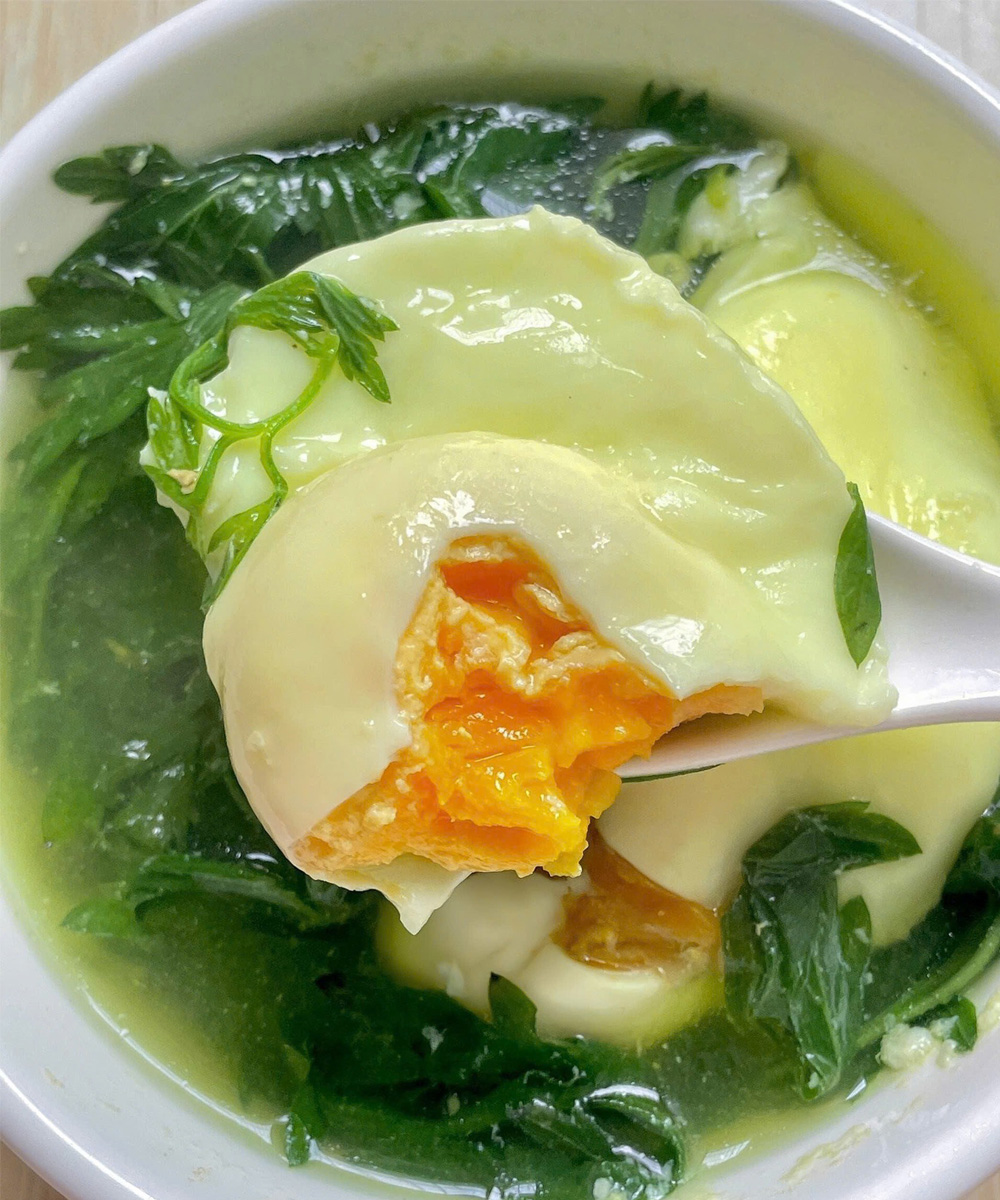
Some dishes may seem very familiar in everyday meals, but when understood and used correctly, their value is far from “ordinary.” Poached egg soup with mugwort is one such example. It looks simple, yet it simultaneously affects blood circulation, the nervous system, and even the skin.
1. Boosts blood circulation – reduces fatigue at the root
Mugwort contains flavonoids and natural essential oils that help mildly dilate blood vessels, improving circulation. When circulation improves, more oxygen and nutrients reach tissues, helping reduce dizziness, lightheadedness, and lingering fatigue.
Eggs provide iron, vitamin B12, and protein—key elements in red blood cell production. When combined, this dish supplies the body with the “materials” needed to produce blood while also supporting efficient circulation. That’s why many people feel lighter, less tired, and notice a healthier-looking complexion after eating it regularly.
2. Nourishes the skin from within – not just external care
Many people focus heavily on skincare products but forget that skin is nourished from within. Eggs are one of the few foods with complete protein, providing all essential amino acids needed for skin cell regeneration. They also contain vitamin A for epidermal renewal, vitamins B2 and B12 for brighter skin, and zinc to reduce inflammation and control oil.
Mugwort adds antioxidants that help reduce cellular damage caused by free radicals—one of the main causes of dull skin and aging. With consistent consumption, the body gains a better nutritional foundation, and the skin gradually becomes brighter and more even-toned—not an instant whitening effect, but a steady improvement.
3. Supports sleep – calms the nervous system
One thing many people notice: when the body is tired and sleep is poor, the skin deteriorates quickly. Mugwort contains compounds that help soothe the central nervous system, creating a mild sense of relaxation. When paired with a warm, easy-to-digest dish like egg soup, the body transitions more easily into a resting state.
Eggs also contain choline, a nutrient involved in neurotransmitter function, helping stabilize brain activity. As a result, many people find that eating this dish in the evening helps them fall asleep more easily, sleep more deeply, and wake up feeling less sluggish.
4. Aids digestion – reduces bloating and abdominal discomfort
Mugwort has warming properties that help soothe the stomach and improve “cold stomach” conditions, which are common among women. Its compounds also gently stimulate digestion, promoting moderate gastric juice secretion, improving appetite, and reducing bloating.
Combined with eggs—a highly digestible protein source—this soup is light on the stomach, making it suitable for those with weak digestion, poor appetite, or frequent post-meal bloating.
5. Supports immunity – gentle recovery for the body
Eggs provide high-quality protein, vitamin D, B12, and zinc, all of which help maintain immune function. Mugwort contributes antioxidants that support mild anti-inflammatory effects. This isn’t a “quick immunity booster,” but with regular consumption, it helps the body recover gradually and maintain stability over time.
It’s especially beneficial for people recovering from illness, those who feel fatigued, or those with heavy workloads—it’s easy to eat and helps restore energy without overwhelming the body.
6. Overall benefits – simple dish, multi-system support
What makes poached egg mugwort soup special is that it doesn’t target just one aspect of health—it simultaneously supports circulation, digestion, the nervous system, and the skin. With consistent intake (2–3 times per week), the body improves in a steady and sustainable way rather than through quick but short-lived effects.
HOW TO COOK TO PRESERVE NUTRITION
The ingredients are simple: a handful of mugwort, 1–2 eggs, and basic seasoning. Bring water to a boil, add the mugwort first, then crack the eggs in to poach once it returns to a boil. Season lightly and turn off the heat. Avoid overcooking, as it can reduce active compounds and vitamins.
IMPORTANT NOTES
This dish is beneficial but should not be overused—2–3 times per week is enough. Pregnant women should be cautious when consuming mugwort. People with a “heaty” constitution should also eat it in moderation to avoid discomfort.
