
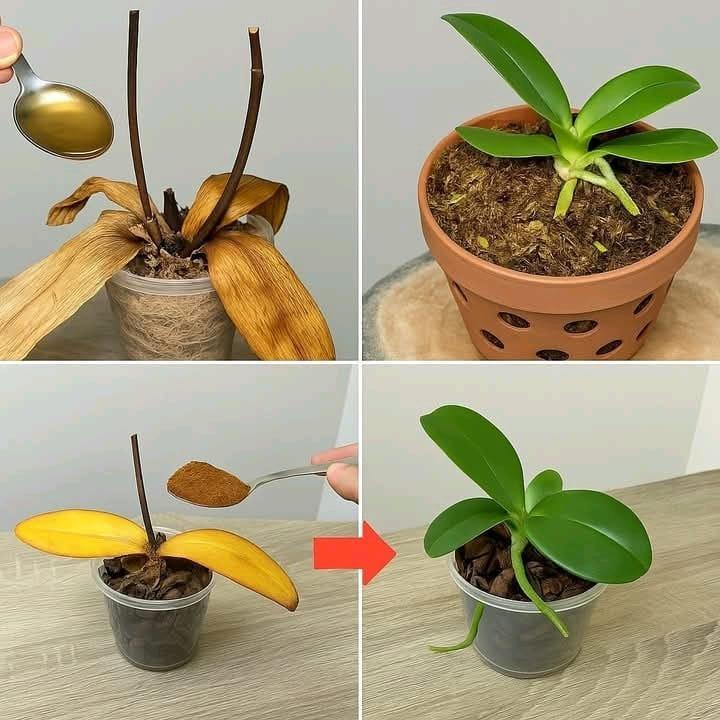
Orchids are among the most beautiful houseplants, admired for their elegant flowers and long-lasting blooms. However, they can be sensitive to watering mistakes, poor drainage, and root problems.
One of the most common issues orchid owners face is root rot. When roots begin to decay, the plant often responds with yellow leaves, weak growth, and an overall unhealthy appearance.
Fortunately, a struggling orchid is not always beyond saving. With patience and proper care, many orchids can recover and develop healthy new roots.
Recognizing Root Rot
Healthy orchid roots are typically firm and green or silvery white.
Roots affected by rot often appear:
Dark brown or black
Soft and mushy
Hollow or collapsed
Unpleasant-smelling
When root rot progresses, the orchid may lose its ability to absorb water and nutrients properly.
Step 1: Remove the Damaged Roots
Carefully remove the orchid from its pot and gently shake away the growing medium.
Inspect all roots closely.
Using sterilized scissors or pruning shears, trim away all rotting roots while preserving any healthy tissue.
Clean cuts help reduce stress and minimize the risk of further infection.
Step 2: Clean the Remaining Roots
After trimming, gently rinse the remaining roots with clean water to remove debris and old growing material.
Some growers choose to use a mild baking soda solution as part of the cleaning process.
Mix:
1 teaspoon baking soda
2 liters of water
Allow the roots to soak briefly, then let them air dry before repotting.
Step 3: Repot in a Suitable Growing Medium
Orchids require excellent airflow around their roots.
Many growers use orchid bark, sphagnum moss, or specialized orchid mixes designed to provide both moisture retention and ventilation.
If using moss:
Use clean, sterilized material
Avoid packing it too tightly
Allow space for airflow
Place the orchid carefully in a clean pot and secure it gently.
Step 4: Create a Recovery Environment
A recovering orchid benefits from stable conditions.
Provide:
Bright indirect light
Good air circulation
Moderate humidity
Protection from direct sun
Avoid overwatering during the first days after repotting, as freshly cut roots need time to heal.
Step 5: Resume Watering Carefully
After the recovery period, begin watering gradually.
Many orchid growers prefer the soaking method:
Immerse the pot briefly in water
Allow excess water to drain completely
Never leave the roots sitting in water
Proper drainage is one of the most important factors in preventing future root rot.
Rice Water as a Supplemental Orchid Treatment
Some orchid enthusiasts use rice water as an occasional supplement because it contains small amounts of minerals and nutrients.
To prepare rice water:
Soak a small amount of rice in water
Allow nutrients to disperse into the liquid
Use the strained water occasionally
Rice water should be used sparingly and should not replace a balanced orchid fertilizer when one is needed.
Ongoing Orchid Care
To help your orchid remain healthy:
Inspect roots regularly
Avoid overwatering
Provide indirect sunlight
Maintain good airflow
Remove dead leaves and stems when necessary
Repot periodically as the medium ages
A Note About Blooming Claims
Many online articles promise that a single ingredient will make orchids bloom continuously all year.
In reality, flowering depends on many factors, including species, light levels, temperature, humidity, plant maturity, and overall health.
No single spoonful of any product can guarantee year-round blooming.
Final Thoughts
An orchid with root rot can often recover if damaged roots are removed and proper growing conditions are restored.
Patience is essential. New roots may take weeks to develop, but with consistent care, many orchids regain their strength, produce healthy leaves, and eventually reward their owners with beautiful blooms once again.
