
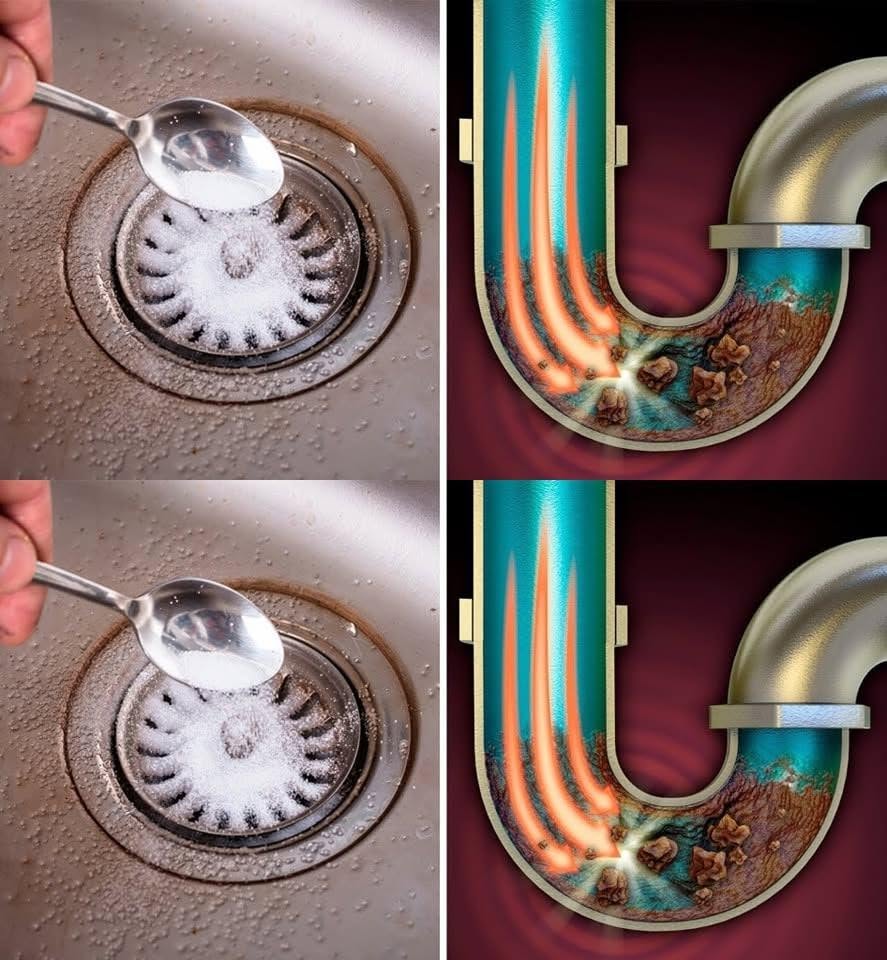
A clogged sink is one of those household problems that always seems to happen at the worst possible moment. Water begins draining slowly, unpleasant smells appear, and before long the sink may stop emptying completely.
Before calling a plumber, many minor clogs can be handled at home using simple products and a careful step-by-step method.
Why Sinks Get Clogged
Bathroom and kitchen sinks are used every day, so it is normal for buildup to form inside the pipes over time.
Common causes include:
Hair
Soap residue
Food scraps
Grease
Limescale
Dirt and debris
When these materials collect inside the drain, water starts moving more slowly until the pipe becomes partially or completely blocked.
The First Method: Use a Plunger
A plunger is one of the simplest tools for clearing minor sink clogs.
Place the rubber cup over the drain.
Press down firmly to create suction.
Pull upward quickly.
Repeat several times.
The pressure can help loosen the blockage and allow water to flow again.
A Natural Method with Baking Soda and Vinegar
Baking soda and vinegar are often used to help loosen residue inside drains.
Pour baking soda directly into the drain.
Add white vinegar.
Cover the drain for several minutes.
Flush with hot water.
This method may help with light buildup and unpleasant odors.
The Powdered Detergent Method
Another simple household method uses powdered laundry detergent and boiling water.
This approach may help dissolve grease, dirt, and some residue inside the drain.
What You Need
2 tablespoons eco-friendly powdered laundry detergent
Boiling water
A kettle or pot
Step-by-Step Instructions
Boil a pot or kettle of water.
Pour about 2 tablespoons of powdered detergent into the sink drain.
Slowly pour boiling water into the drain.
Allow the mixture to work for 15 to 20 minutes.
Turn on the tap and check whether the water drains normally.
The hot water helps move the detergent down the pipe, while the detergent helps break down grease and buildup.
Why This Method Works
Powdered detergent contains cleaning agents designed to break down oils, dirt, and residue.
When combined with boiling water, it may help loosen materials stuck inside the drain.
This method is especially useful for minor clogs caused by soap residue, grease, or general dirt buildup.
Alternative: Liquid Detergent or Baking Soda
If you do not have powdered detergent, liquid dish soap may also help with greasy clogs.
Pour a small amount into the drain, follow with hot water, and wait several minutes before rinsing again.
Baking soda can also be used with hot water as a gentler option for regular drain maintenance.
How to Prevent Future Clogs
Prevention is always easier than fixing a blocked sink.
Avoid pouring grease into the sink.
Use a drain strainer to catch hair and food scraps.
Flush drains regularly with hot water.
Clean bathroom drains frequently.
Avoid pushing foreign objects into the drain.
When to Call a Plumber
Home methods are useful for minor blockages, but they are not suitable for every situation.
Call a plumber if:
The sink remains blocked after several attempts.
Water backs up into other drains.
There is a strong sewage smell.
You hear gurgling sounds from the pipes.
The clog keeps returning.
Final Thoughts
A clogged sink can be annoying, but minor blockages can often be improved with simple household methods.
A plunger, baking soda and vinegar, or powdered detergent with boiling water may help restore normal drainage without harsh chemicals.
With regular maintenance and careful use, you can keep your sink flowing smoothly and avoid many common plumbing problems.
