
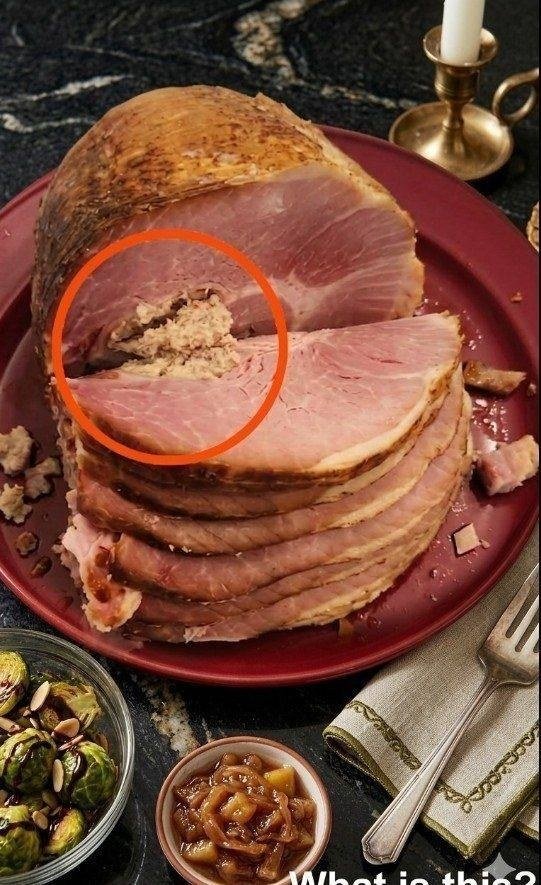
First: What Is Ham, Really?
Before diving into the marks themselves, it helps to understand what ham is.
Ham is pork that has been preserved through curing, smoking, or both. The curing process involves salt, sometimes sugar, and often nitrates or nitrites, which help preserve the meat and give it that familiar pink color.
Because of this processing, ham behaves a little differently than fresh meat. Its texture, color, and even smell can vary depending on how it was prepared—and that’s where many of these “strange marks” come from.
Common Types of Marks on Ham (and What They Mean)
Let’s go through the most common things people notice—and whether they’re harmless or a cause for concern.
1. Iridescent or Rainbow-Like Sheen
This is one of the most alarming-looking effects.
You slice into ham and suddenly see shimmering colors—greens, blues, even purples—reflecting off the surface.
It looks unnatural. Almost chemical.
But here’s the truth: it’s usually harmless.
This effect is caused by light reflecting off the muscle fibers and fat layers in the meat. When the surface is cut in a certain way, it can refract light much like a CD or soap bubble.
What to know:
It does not mean the ham is spoiled
It’s purely a visual effect
It’s more common in processed or sliced ham
If everything else seems normal—smell, texture, expiration date—you’re likely fine.
2. Small White Spots or Crystals
Sometimes you’ll notice tiny white dots or grainy patches inside the ham.
At first glance, they might look like mold—but they’re usually not.
These spots are often crystals formed from amino acids like tyrosine, which naturally occur during the curing and aging process.
They’re especially common in:
Dry-cured or aged hams
Higher-quality, longer-aged products
What to know:
They are safe to eat
They’re actually a sign of aging and flavor development
They may add a slightly crunchy texture
Think of them as similar to the crystals you sometimes find in aged cheese.3. Dark Spots or Bruise-Like Marks
Dark patches can be a bit trickier.
These marks may appear as:
Deep red or brown spots
Uneven discoloration
Areas that look almost bruised
In many cases, this comes from blood pooling during processing or minor damage to the muscle tissue.
What to know:
If the smell is normal, it’s often safe
These spots don’t necessarily indicate spoilage
You can cut around them if they bother you
However, if the dark areas are accompanied by a sour smell or slimy texture, that’s a different story (we’ll get to that shortly).
4. Tiny Holes or Pitted Surfaces
Occasionally, ham may have small holes or an uneven, slightly spongy texture.
This can happen during:
Injection curing (where brine is pumped into the meat)
Mechanical tenderizing
Processing and shaping
What to know:
It’s usually a result of manufacturing
It doesn’t automatically mean the ham is unsafe
Texture may feel slightly different but still edible
If the holes look excessive or are paired with unusual odor or stickiness, it’s better to be cautious.
5. Slimy or Sticky Surface
Now we’re moving into warning territory.If your ham feels:
Slimy
Sticky
Coated with a film that wasn’t there before
This is often a sign of bacterial growth.
Even if the ham doesn’t smell terrible yet, this texture change is a red flag.
What to do:
Do not eat it
Discard it immediately
This is one of the clearest indicators that the ham has gone bad.
6. Green or Gray Discoloration
Unlike the harmless rainbow sheen, flat green or gray patches are not a good sign.
This type of discoloration can indicate:Spoilage
Bacterial growth
Improper storage
What to do:
If the color looks dull, patchy, or unnatural, throw it out
Don’t try to “cut around” it
When it comes to spoiled meat, it’s not worth the risk.
7. Mold Growth
Mold can appear as fuzzy spots in colors like:
White
Green
Blue
Black
On some dry-cured whole hams, surface mold can be normal and is sometimes removed before eating.
But for sliced or packaged ham?
That’s a no.
What to do:
Discard immediately
Do not attempt to salvage it
Mold on processed ham is a clear sign it’s no longer safe.
How to Tell If Ham Is Safe Overall
When in doubt, don’t rely on appearance alone. Use a combination of checks:1. Smell
Fresh ham should smell:
Mild
Slightly salty or smoky
If it smells:
Sour
Rotten
Like ammonia
Throw it out.
2. Texture
Good ham:
Slightly moist
Firm but tender
Bad ham:
Slimy
Sticky
Excessively mushy
3. Expiration Date
Always check:Use by” date for safety
“Best before” for quality
Even if it looks okay, expired ham can still be risky.
4. Storage Conditions
Ham should be:
Refrigerated at all times
Sealed properly
If it’s been left out for more than 2 hours at room temperature, it’s safer to discard it.
Why These Marks Happen in the First Place
It all comes down to how ham is made.
The curing, smoking, and processing methods create a wide range of visual variations. Add in factors like:Light reflection
Protein structure
Moisture levels
Aging processes
…and you get a product that doesn’t always look “perfect,” even when it’s completely safe.
In fact, some of the “strangest” marks are actually signs of traditional preparation methods or high-quality curing.
When to Trust Your Instincts
Here’s a simple rule that cuts through all the confusion:
If something about the ham makes you hesitate—really hesitate—it’s okay to throw it away.
Food safety isn’t the place to take risks.
A few dollars’ worth of ham isn’t worth the possibility of foodborne illness.
Final Thoughts
Strange marks on ham can be surprising, even unsettling—but most of the time, they’re completely harmless.A rainbow sheen? Normal.
White crystals? Fine.
Minor dark spots? Usually okay.
But when you see slime, mold, or strong discoloration paired with a bad smell—that’s your cue to toss it.
The key is knowing the difference between natural variations and warning signs.
Because once you do, that moment of uncertainty in your kitchen becomes a lot less stressful—and a lot more manageable.
